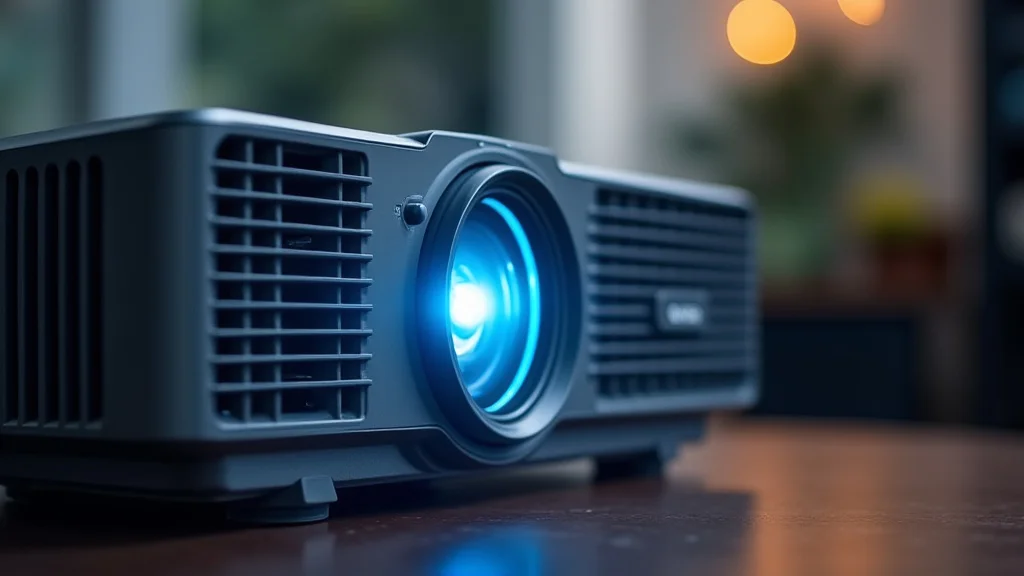
Picture this: It’s Friday night, you’ve got the popcorn ready, and you’re dreaming of a movie night under the stars. But what if you could have that experience anytime, anywhere? The portable home cinema projector makes that dream a reality. This guide will walk you through everything you need to know about these fantastic devices, from choosing the right one to setting it up for the perfect viewing experience. You’ll learn the key features, advantages, and find out how easy it is to transform any space into your personal cinema. Get ready to enhance your entertainment options, boost your viewing enjoyment and create unforgettable moments.
Key Takeaways
- Discover the core features and specs of a portable home cinema projector.
- Learn about the key factors to consider when choosing a projector.
- Understand how to easily set up and optimize your projector for the best picture quality.
- Explore the various applications of these devices beyond movie nights.
- Find out how to ensure your projector delivers a satisfying audio-visual experience.
- Gain insights into common issues and how to troubleshoot them for a smooth experience.
Transform Your Space With a Portable Home Cinema Projector
The concept of bringing the big screen experience to your home, or even outside, has changed drastically with the emergence of the portable home cinema projector. These devices have become significantly more compact, affordable, and feature-rich. Gone are the days of bulky projectors that require a dedicated room. Now, you have the freedom to enjoy movies, games, and presentations anywhere you choose, from your backyard to a friend’s place. The modern portable projectors are small enough to fit in a backpack or carrying case, making them perfect for on-the-go entertainment or sharing presentations.
Key Features to Seek Out
When searching for a portable home cinema projector, several features are important for an optimal viewing experience. Resolution, brightness, and contrast ratio are key. You will also want to consider the projector’s connectivity options, such as HDMI, USB, and wireless capabilities like Wi-Fi or Bluetooth. Another factor is the projector’s lamp life and energy efficiency. Finally, portability features such as a built-in battery, lightweight design, and ease of setup are all considerations.
- Resolution: The resolution directly affects the picture’s clarity and detail. Opting for a higher resolution, such as 1080p (Full HD) or even 4K, ensures a sharper and more immersive viewing experience. Consider the screen size; higher resolutions become more noticeable on larger screens.
- Brightness: Measured in lumens, brightness is critical, especially when viewing in environments with ambient light. A higher lumen rating means the projector will produce a brighter image, allowing it to be visible even when the room isn’t completely dark.
- Contrast Ratio: The contrast ratio determines the difference between the darkest blacks and the brightest whites that the projector can produce. A higher contrast ratio means the image will have more depth and detail, with richer blacks and more vibrant colors.
- Connectivity: The ability to connect various devices is essential. Look for projectors that offer HDMI ports for connecting to laptops, gaming consoles, and Blu-ray players. USB ports let you play media files directly from a USB drive. Wireless connectivity, such as Wi-Fi and Bluetooth, enhances portability and ease of use.
- Portability: Look for a lightweight and compact design with a built-in battery for true portability. Consider whether the projector comes with a carrying case and if it has a user-friendly interface for easy setup and use.
High-resolution options offer a crisp and clear image, allowing viewers to see details more precisely. This is especially beneficial for watching movies or playing video games. A higher resolution also means that the projected image will look better, even when viewed up close.
Projectors with higher brightness levels are more versatile, as they can be used in a broader range of settings. If you plan to use your projector outdoors or in a room with some natural light, a higher lumen rating is very important. Brightness ensures the image remains vibrant and visible, despite the presence of external light sources.
A higher contrast ratio gives the image a more dynamic and realistic appearance. This is important for movies, as it ensures that dark scenes are not washed out and bright scenes have impact. The greater the contrast, the more immersive and enjoyable the viewing experience becomes.
Connectivity allows you to easily share content from many devices. Wi-Fi allows for streaming content from online services without the need for cables. Bluetooth allows you to connect external speakers or headphones for better audio.
A truly portable projector should be easy to move and set up in different locations. Built-in batteries add flexibility, enabling you to use the projector anywhere without needing a power outlet. A simple setup process ensures that you spend more time enjoying the content and less time configuring the device.
Understanding Key Specifications
Beyond the core features, understanding the technical specifications will help you make a wise decision. Knowing these details ensures your projector fits your specific needs and expected use. Examining these specifications will guide you toward a device that best aligns with your preferences and intended applications. You’ll make a more informed choice that will lead to a more enjoyable viewing experience.
- Aspect Ratio: This refers to the width-to-height proportion of the projected image. Common aspect ratios include 16:9 for widescreen movies and 4:3 for older content. Choose a projector that supports the aspect ratios of the content you plan to view to avoid image distortion.
- Throw Ratio: The throw ratio determines the distance needed between the projector and the screen to achieve a certain image size. A short throw ratio means the projector can create a large image from a short distance, ideal for smaller spaces. A standard throw ratio is suited for larger rooms.
- Lamp Life: The lamp life specifies how long the projector’s light source will last before it needs to be replaced. Lamp life is measured in hours. Longer lamp life means the projector will last longer before you need to consider maintenance. LED projectors have the advantage of long lamp lives.
- Keystone Correction: Keystone correction adjusts the image to make it rectangular if the projector isn’t placed perfectly perpendicular to the screen. This allows you to position the projector at an angle, which is useful in different environments.
Choosing the correct aspect ratio ensures that movies and videos appear as intended by their creators. The 16:9 ratio is ideal for most modern content, while a 4:3 ratio is suitable for older television shows. The correct aspect ratio makes sure that images are not stretched or squeezed.
The throw ratio is a very important consideration in choosing a projector because it decides where you can place the device. A short-throw projector is perfect for small spaces, like bedrooms or apartments, where it may not be possible to place the projector far from the screen. A standard throw ratio needs more space but is suitable for most viewing situations.
A longer lamp life reduces the amount of time and money spent on projector maintenance. LED projectors typically last longer. This can significantly lower the total cost of ownership over the life of the projector, and it is a good consideration for long-term use.
Keystone correction is useful when the projector is not perfectly aligned with the screen. It corrects the image distortion that might otherwise occur. This feature is especially beneficial in situations where setting up the projector centrally is not possible.
Choosing the Right Projector for Your Needs
Selecting the ideal portable home cinema projector involves considering your specific requirements and how you’ll use the device. These include the size of the space you will be using it in, the content you plan to view, and your budget. By evaluating these factors, you can make an informed decision that enhances your viewing experience.
Assessing Your Space and Needs
The space you have available will affect the size and type of projector you choose. Other factors include the level of ambient light and the content you’ll be watching. These elements are key to determining which specifications and features are necessary for your projector.
- Room Size and Screen Size: Consider the dimensions of the room. Small rooms may be better suited for short-throw projectors, which can create large images from a short distance. Larger rooms may give you more flexibility. Determine the screen size you want based on the available space and viewing distance.
- Ambient Light: Assess the amount of ambient light in your viewing environment. If the room has a lot of natural light, you will need a projector with a higher brightness rating to counteract the effects of ambient light. For darker rooms, a lower brightness rating may be sufficient.
- Content Type: Consider the type of content you’ll be watching. If you plan to watch movies and video games, higher resolutions and contrast ratios are important for a superior experience. For presentations, focus on brightness and color accuracy.
- Portability Requirements: If you plan to move your projector frequently, you’ll need a lightweight and compact design. The inclusion of a built-in battery is a must for true portability. Consider a carrying case and a user-friendly setup for ease of use.
The size of the room and the screen you plan to use are important considerations. A short-throw projector is perfect for smaller spaces. Large rooms allow for bigger screen sizes. Deciding on the screen size that fits the room enhances your viewing experience.
The level of ambient light is a key factor in choosing the brightness level of your projector. A brighter projector is needed to overcome sunlight. Darker spaces can get by with a dimmer projector. Adjusting the brightness level ensures optimal picture quality.
The type of content you plan to watch will influence the features you require. High resolution and high contrast ratios enhance your viewing experience for movies and video games. For presentations, prioritize brightness and color accuracy to achieve clarity and impact.
If you’re often moving the projector, portability is a key factor. A compact, lightweight design with a built-in battery enables flexibility. A carrying case and a simple setup process will make it easier to enjoy your projector anywhere.
Budget Considerations
Setting a budget helps narrow down your options and focus on projectors with the features you need. Determine how much you are ready to spend before you start your search. Remember, a good portable home cinema projector doesn’t have to break the bank. There are many great projectors that offer a superior viewing experience at different price points. Understanding your financial boundaries can help you locate the best value.
- Price Range: Define your budget. Portable projectors are available across a wide range of price points. Decide how much you can spend to avoid overspending.
- Value for Money: Consider the features you want and how they align with the price. Do not focus only on the price; consider the overall value, including the resolution, brightness, and connectivity options.
- Future-Proofing: Consider buying a projector that includes long-term value. Investing in a model with higher resolution and advanced features ensures your projector remains relevant as technology changes.
- Additional Costs: Account for any extra costs, such as a projection screen or speakers. Some projectors come with integrated speakers, while others require external speakers for optimal audio. Factor in these additional expenses when establishing your budget.
Setting a price range is vital before you start searching. Portable projectors span various price points. Sticking to your budget makes the process more efficient.
Consider the total value when comparing projectors. A higher price may be acceptable if it provides a superior viewing experience. Prioritizing features will help you choose the projector that offers the most for your investment.
Buying a device that suits future use can save you from having to purchase a replacement too soon. Investing in a high-resolution, feature-rich device can keep your projector up-to-date.
Look into any potential extra costs before buying. You might need to buy a screen or external speakers. Including these costs will help you choose a projector that meets all your needs.
Setting Up Your Portable Home Cinema Projector
Setting up your portable home cinema projector is a straightforward process. The most important elements are the physical setup, optimizing the image, and configuring the audio. These steps ensure you get the best viewing experience from your device, transforming your space into a personal cinema. With careful planning and setup, you can set the stage for many memorable movie nights and presentations.
Physical Setup and Placement
Correct placement is essential for the best image quality. The proper distance from the screen, angle, and position will directly affect the clarity and experience of the image. The right physical setup makes sure that the projected content is displayed as intended and that the viewing experience is a pleasant one.
- Screen or Surface Selection: Decide on the surface you will use to project the image. A dedicated projection screen offers the best results, as it is designed to reflect light optimally. If using a wall, make sure it is white, flat, and free of imperfections.
- Projector Placement: Position the projector at the correct distance from the screen or wall based on the throw ratio. Consult the projector’s specifications to determine the ideal distance for the desired image size. Place the projector on a stable surface or use a tripod.
- Keystone and Focus Adjustment: Use the keystone correction feature to square the image if the projector is not perfectly aligned with the screen. Adjust the focus ring to ensure the image is sharp and clear. Repeat these steps until the image is well aligned and clear.
- Power and Connection: Connect the projector to a power source. Plug in the necessary cables, such as HDMI for video and audio. Connect any other devices, such as a laptop or gaming console. Make sure that all cables are secured and correctly connected.
Selecting a good surface is a vital part of the setup. A projection screen is the best choice, as it’s built to reflect light optimally. A white, flat wall also can be used. The surface chosen will affect the clarity of the image.
Place the projector at the right distance for the image you want. Review the specifications for the correct distance from the screen, and place the projector on a stable surface. The right placement ensures that the image is shown correctly.
Use the keystone correction to fix any image distortion if the projector is not perfectly aligned. Use the focus ring to achieve a sharp and clear image. This makes sure that the image is the correct shape and is clear for the viewer.
Make sure the projector has power and that all of the connecting cables are plugged in. These connections include power, video, and audio cables, and these steps ensure that the projector is ready to go.
Image Optimization and Settings
Once you’ve set up the projector, it’s essential to optimize the image settings to get the best picture quality. Fine-tuning the brightness, contrast, color, and aspect ratio will provide you with a clearer and more engaging viewing experience. These small adjustments can significantly improve the quality of your images.
- Brightness and Contrast: Adjust the brightness and contrast settings. Increase the brightness to make the image visible in a room with ambient light. Adjust the contrast to get the best balance between light and dark elements in the picture.
- Color Settings: Fine-tune the color settings, such as color temperature and saturation. Make sure the colors look natural and the image is not oversaturated or washed out.
- Aspect Ratio Adjustment: Make sure the aspect ratio is set correctly for the content you’re viewing. This ensures the image does not stretch or distort. Select the appropriate ratio (16:9 for widescreen or 4:3 for standard definition).
- Picture Modes: Select a picture mode that is best suited for the content you’re viewing. Projectors have various picture modes, such as movie, gaming, and presentation mode. Each setting optimizes image settings for various kinds of content.
Adjust the brightness and contrast to the environment. Raise the brightness level in a room with a light source, or adjust contrast for a good balance between the light and dark parts of the image. This ensures a more vibrant viewing experience.
Adjusting the color settings will ensure the best possible picture. Tune the color settings to ensure natural-looking images. This ensures that the image is not oversaturated or washed out.
Make sure the aspect ratio is properly set to match the content being displayed. This will prevent any stretching or distortion. Choose between the 16:9 ratio for most modern content or the 4:3 ratio for older content.
Choosing the correct picture mode ensures the best viewing experience. You’ll find modes for movies, gaming, or presentations, each with settings optimized for each content type.
Audio Setup and Considerations
Sound quality contributes significantly to the overall viewing experience. This is especially true for movies. Whether using the projector’s built-in speaker or external audio equipment, making sure the audio is clear and appropriately set up is key to a superior viewing experience. Properly set up audio enhances the experience and immerses viewers in the content.
- Internal Speakers: Evaluate the sound quality of the projector’s internal speakers. These are often sufficient for presentations or casual viewing. Position the projector to aim the speakers toward the viewers.
- External Speakers: Connect external speakers for better sound quality, such as Bluetooth speakers or a soundbar. This is especially useful for movies and gaming. Position the speakers for optimal sound delivery, such as setting them at ear level.
- Volume Levels: Adjust the volume levels on both the projector and the external speakers. Make sure the volume is at a comfortable level, and not too loud or too quiet. Test the volume levels with your intended viewing content.
- Audio Settings: Adjust the audio settings of the projector or external speakers, such as bass, treble, and equalizer settings. Fine-tune the settings to match your sound preferences and the acoustics of the viewing environment.
Take advantage of the built-in speakers for casual or quick viewing. Positioning the speakers towards the viewers optimizes the audio performance. This is the simplest option.
External speakers offer a more immersive experience for movies and gaming. This is the recommended option for a more immersive sound. Position the speakers to create the best sound.
Make sure the volume is set to a comfortable level. Adjust the volume on both the projector and external speakers. Testing the volume with content will ensure a great experience.
Refine your listening experience by adjusting the audio settings. Adjust the bass, treble, or use an equalizer. Fine-tuning the audio will ensure optimal sound.
Beyond Movie Nights: Additional Uses
While the portable home cinema projector is ideal for enjoying movies and video games, its applications extend far beyond leisure. These adaptable devices are useful for educational presentations, business meetings, and creative projects. Their versatility makes them a valuable tool for a variety of users.
Business and Education Applications
Portable projectors can greatly improve business and educational endeavors. Their adaptability makes it easier to share information, make more attractive presentations, and enhance engagement. This results in more captivating and efficient sessions.
- Presentations: Utilize your projector for presentations in various settings. Their portability makes them a great tool for delivering professional presentations, be it in the office, at a conference, or for client meetings.
- Training and Workshops: Employ your projector for training sessions and workshops. It allows you to present large-scale visual content easily, making learning more effective and interactive.
- Educational Purposes: Use the projector for educational purposes, such as in schools or for home schooling. It improves the learning experience for students with engaging visuals and makes content more accessible.
- Business Meetings: Improve business meetings by projecting data, charts, and multimedia. This assists in providing a more organized and comprehensive approach to the business’s information.
Portable projectors enable professional-looking presentations in many locations. Their portability makes them ideal for office, conference, or client meetings.
Projectors are great for training and workshops. They make learning better by displaying visual content on a larger scale.
Projectors enhance education by presenting visual content to students. They enhance the learning experience.
Projectors provide a clearer view of data, charts, and multimedia in business meetings. This makes the meetings more organized and comprehensive.
Creative and Entertainment Uses
Aside from their usefulness in business and education, portable projectors offer many creative and entertainment options. You can unleash your creativity through various projects. This adds a fun and engaging element to various projects.
- Gaming: Enjoy video games on a large screen. Connect gaming consoles or PCs for immersive gaming experiences. Projectors are great for bringing the gaming experience to a whole new level.
- Outdoor Events: Host outdoor movie nights or watch sports events. Portable projectors with a long battery life are great for these events. Transform your backyard into your own cinema.
- Digital Art and Photography: Project digital art and photography on various surfaces. Use projectors to showcase artistic creations and for creative explorations and artistic endeavors.
- Home Decoration: Use the projector for home decoration projects, such as projecting patterns or images on walls. This provides an exciting and interactive element to your home.
Projectors improve the gaming experience with large-screen visuals. The large screen creates a more immersive and fun gaming experience.
Projectors are perfect for outdoor events. Watching movies or sports events becomes possible with the long-lasting battery. Transform your outdoor space into a cinema.
Projectors allow you to display digital art on different surfaces. This helps artists showcase their work in creative environments.
Projectors are great for home decoration, as they can project patterns on the walls. This creates a unique aesthetic.
Troubleshooting Common Issues
While portable home cinema projectors are relatively user-friendly, you might encounter some issues. Knowing how to resolve these problems will ensure a better experience. These troubleshooting techniques let you quickly correct problems and get back to enjoying your entertainment.
Addressing Common Problems
Troubleshooting is a normal part of projector use. Common issues range from image problems to connectivity and audio issues. Being able to address these issues is important for a seamless viewing experience. These techniques will equip you to quickly diagnose and fix these problems.
- Image Issues: If the image appears blurry or distorted, first make sure the projector is correctly focused. Check the keystone correction and the lens settings. Make sure that the projector is positioned at the right distance.
- Connectivity Problems: If you have connectivity problems, verify that the cables are properly connected and that the devices are compatible. Try different cables or ports to eliminate the problem. Reset the projector or the connected device.
- Audio Issues: If there are audio problems, check the volume settings on the projector and any external devices. Verify that the audio cables are properly connected. If necessary, switch between different audio output options.
- Power and Battery Issues: If the projector won’t turn on, ensure that it’s properly connected to a power source. Check the battery level if the projector uses a battery. Check the power adapter or cord if the device does not turn on.
A blurry or distorted image can often be fixed. Check the focus, keystone correction, and lens settings. These adjustments will address the problem.
Connectivity issues can come from many sources. Ensure that the cables are connected. Use different cables and ports. Resetting the devices is also effective.
Audio problems can be identified and fixed by checking volume and cable connections. Use the different audio output options to solve the issue.
Power problems can be easily fixed. Make sure the device is plugged in, and check the battery levels. A faulty power supply could be the cause.
Maintenance and Care
Taking care of your portable home cinema projector is important to ensure its longevity and performance. Basic maintenance, such as cleaning and proper storage, helps keep your projector working at its best. Taking care of your projector will extend its lifespan and maintain image quality.
- Cleaning the Lens: Keep the lens clean by wiping it with a soft, lint-free cloth. Do not use harsh cleaning solutions, as these could damage the lens. Clean your lens frequently to ensure image quality.
- Dust Removal: Remove dust from the projector’s vents to prevent overheating. Use compressed air to carefully clean out dust. Avoid opening the projector casing unless instructed.
- Lamp Life and Replacement: Understand the lamp life of the projector and replace it when needed. Always use the proper replacement lamps recommended by the projector manufacturer. Follow instructions for lamp replacement.
- Storage and Handling: Store your projector in a dry, cool place when not in use. Protect it from direct sunlight and extreme temperatures. Use the carrying case to store your projector and protect it while you are traveling.
Cleaning the lens often maintains image quality. Always use a soft, lint-free cloth. Avoid abrasive cleaning solutions.
Dust can cause your projector to overheat. Use compressed air to clean the vents. Avoid opening the projector casing.
Be aware of your projector’s lamp life and replace the bulb when required. Follow the manufacturer’s directions for the replacement.
Proper storage is important to protect your projector. Keep it in a dry and cool area. Use the carrying case when moving the projector.
Common Myths Debunked
Myth 1: Portable Projectors Have Poor Picture Quality
In the past, this might have been true, but now, the quality of portable home cinema projector models has improved greatly. Many models feature 1080p or even 4K resolution, offer good contrast ratios, and have impressive brightness levels. The technology is rapidly advancing, allowing for a fantastic picture.
Myth 2: They are Only Good for Small Screens
While the size of these projectors is small, many models can project images onto very large screens, rivaling the size of home theater setups. The image size depends on the throw ratio and the distance from the screen. A good projector can fill a wall with a clear image, especially in darker environments.
Myth 3: All Projectors Are Difficult to Set Up
Modern portable projectors are easy to set up, usually taking only a few minutes. Most models have automatic keystone correction and focus features. They also include simple connectivity options like HDMI and wireless options, that make connecting and displaying content easy.
Myth 4: You Need a Dark Room for a Good Picture
This depends on the projector’s brightness. Many modern models are quite bright and can be used in rooms with some ambient light, especially if you choose a brighter projector. While a darker room is ideal for optimal contrast, some models work well with a bit of ambient light.
Myth 5: Portable Projectors Are Only for Watching Movies
While movies are very popular, these projectors are versatile. They can be used for presentations, gaming, and even for displaying digital art. Their portability makes them suitable for use at home, the office, or outdoors. The applications are really endless!
Frequently Asked Questions
Question: What is the ideal screen size for a portable projector?
Answer: It depends on your room size and viewing distance. Generally, you can get a good picture on a screen up to 100 inches or more, but test it for the best experience.
Question: How long does the lamp of a portable projector last?
Answer: Lamp life varies, but many LED projectors have lifetimes of up to 20,000 to 30,000 hours, allowing for many years of use.
Question: Can I use a portable projector outdoors?
Answer: Absolutely, but you will need a power source or a projector with a built-in battery. A darker environment is best for outdoor use.
Question: What is the difference between a DLP and an LCD projector?
Answer: DLP projectors produce images using tiny mirrors. LCD projectors use liquid crystal panels. Both technologies have their advantages, but the best one for you depends on your needs.
Question: How do I connect my phone to a portable projector?
Answer: Most projectors connect wirelessly via Wi-Fi or Bluetooth. You can also connect via HDMI, depending on your phone model and projector.
Final Thoughts
The portable home cinema projector is more than just a device; it is a gateway to versatile entertainment. It provides you with the power to transform any space into a theater, bring presentations to life, and enjoy gaming on a grand scale. The market now offers options for all budgets, without any limitations on the viewing experiences you can create. Choosing the right projector for your needs is a straightforward process, once you consider resolution, brightness, and connectivity, along with portability. Remember to make the most of your setup with appropriate placement and optimization. By selecting a projector tailored to your specific needs, you can unlock a universe of entertainment options. So explore your options, and get ready to create amazing viewing experiences.