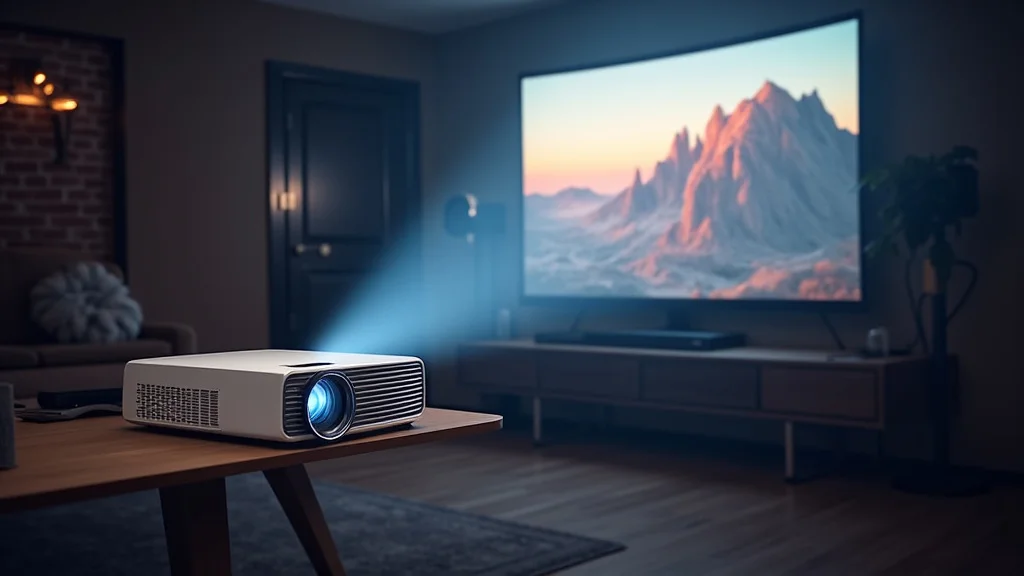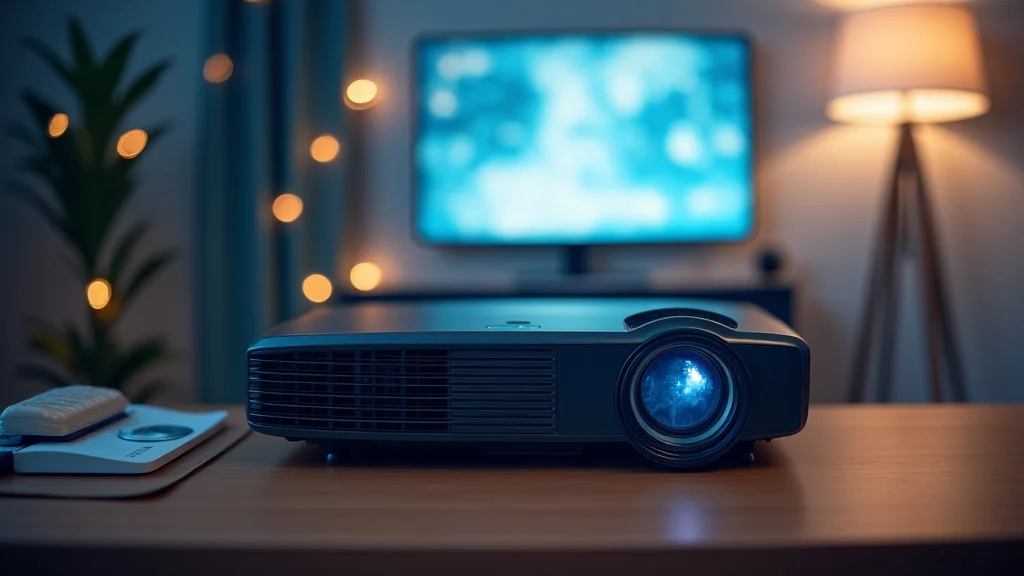
Imagine this: you’re at a friend’s backyard party, the sun is setting, and everyone is ready for a movie night. But instead of squinting at a tiny phone screen, you’ve got a massive, bright display thanks to your portable projector 3000 lumens. This blog post is your guide to choosing and using the perfect one. We’ll explore everything from brightness and resolution to connectivity options, so you can transform any space into an instant home theater. You’ll gain a thorough look at what makes these projectors great, helping you make an informed decision and enjoy amazing entertainment wherever you go. Get ready to learn all about portable projectors!
Key Takeaways
- A portable projector 3000 lumens offers a bright image even in slightly lit environments.
- You’ll discover the key features to consider when shopping for a portable projector.
- Learn about the different types of projectors, including their strengths and weaknesses.
- Understand the importance of resolution, contrast ratio, and throw distance.
- You’ll find tips for setting up and maintaining your portable projector.
- Discover the best uses for these versatile projectors, from movies to presentations.
Unleashing the Power of Portable Projectors 3000 Lumens
Projectors have come a long way. They’re not just for boardrooms or classrooms anymore. The rise of portable projector 3000 lumens models means you can have a big screen experience anywhere. These devices are small, lightweight, and surprisingly powerful. They deliver bright, clear images, even when you’re not in a completely dark room. They provide a high level of brightness, so you can enjoy movies, games, and presentations with friends and family in your backyard, at a campsite, or in any room of the house. Let’s delve into why these projectors are becoming so popular and what to look for when you’re choosing one.
What Are Lumens and Why Do They Matter?
When you’re shopping for a projector, you’ll see a number listed with the unit “lumens.” Lumens measure the brightness of the light that the projector produces. The higher the lumen count, the brighter the image. This is particularly crucial for portable projectors because you often won’t have complete control over the lighting in the environment you’re using them. This measure is used to quantify the amount of light that the projector emits, specifically how bright the picture will be. Think of it like a lightbulb’s wattage; the higher the wattage, the brighter the bulb. With projectors, higher lumens mean a brighter, more visible image, especially in rooms that aren’t completely dark.
- Definition: Lumens are a measure of the total amount of visible light emitted by a light source, like a projector.
- Brightness and Ambient Light: The number of lumens a projector has directly affects how well you can see the projected image in various lighting conditions. A 3000-lumen projector is considered bright.
- Impact on Viewing Experience: A projector with enough lumens will show clear, bright images even in rooms with some ambient light.
For example, if you want to watch a movie in a room with some natural light, a 3000-lumen projector will perform better than a projector with a lower lumen rating. Conversely, you might use a lower-lumen projector in a completely dark home theater. Think about where you plan to use your projector most often and choose the lumen rating accordingly. If you want a projector for outdoor use, you’ll need a bright one, possibly even brighter than 3000 lumens, depending on the environment and time of day.
Understanding Contrast Ratio and Image Quality
Contrast ratio is another key specification to consider when buying a projector. It measures the difference between the brightest and darkest parts of an image that the projector can display. A higher contrast ratio results in a more vibrant and detailed picture, with deeper blacks and brighter whites. It helps images appear more dynamic and realistic. A high contrast ratio is important for movies and games, where you want to see all the details in dark scenes. When considering a portable projector, find a device with a strong contrast ratio to improve the overall picture quality and enhance your viewing experience.
- Definition: Contrast ratio refers to the difference between the brightest white and the darkest black a projector can display.
- Impact on Image Quality: A higher contrast ratio results in a more vivid image with richer blacks and better shadow detail.
- Practical Implications: A higher contrast ratio is essential for watching movies and playing video games where image quality is important.
For example, imagine watching a space movie. With a low contrast ratio, the dark parts of the image will look gray and washed out. However, with a high contrast ratio, you’ll see deep blacks and the stars will be sharp and brilliant. This will create a much more immersive experience. Projectors typically list their contrast ratio as a number followed by a colon and another number. For instance, a contrast ratio of 3000:1 means that the brightest white is 3000 times brighter than the darkest black the projector can produce. Consider this number carefully when making your selection to be sure you get the best image quality.
Choosing the Right Portable Projector 3000 Lumens
Selecting the right portable projector 3000 lumens means you have to consider several factors. One key factor is the resolution, which is the number of pixels the projector can display. The higher the resolution, the sharper and more detailed the image will be. Another factor is the aspect ratio, the shape of the image, which affects how it fits on the screen. Also important are the ports and connectivity options, allowing you to connect various devices like laptops, game consoles, and Blu-ray players. Considering these factors ensures you choose a projector that meets your needs.
Resolution: The Sharpness of Your Image
The resolution of a projector determines the sharpness and detail of the image. It’s measured in pixels, with a higher number of pixels indicating a sharper picture. Consider your intended use when choosing a resolution. If you plan to watch movies or play games, a higher resolution will provide a better viewing experience. You’ll see more detail and enjoy a crisper image. If you plan to use it for presentations, a lower resolution may be adequate, but a higher resolution is always a better choice for overall versatility. Selecting the appropriate resolution for your projector will vastly affect the image quality.
- Definition: Resolution refers to the number of pixels that make up the projected image, defining the level of detail and sharpness.
- Common Resolutions: Common projector resolutions include HD (1280×720), Full HD (1920×1080), and 4K (3840×2160).
- Impact on Viewing Experience: Higher resolutions result in sharper, more detailed images, especially important for movies and games.
For example, if you plan to watch Blu-ray movies or play games, a Full HD projector is a good option. If you want the absolute best picture quality, consider a 4K projector. However, consider the cost, as higher-resolution projectors typically cost more. Also, keep in mind that a projector’s resolution should match the resolution of your content. If you have a Full HD projector, you will be fine with Full HD content, but it won’t be able to display 4K content to its full resolution. In the end, consider what kind of content you’ll be viewing most often and match it to a matching projector resolution.
Aspect Ratio and Display Size
The aspect ratio determines the shape of the projected image. The most common aspect ratios for projectors are 16:9 (widescreen) and 4:3 (standard). The aspect ratio of a projector needs to match the aspect ratio of the content you’re viewing. Also, display size is also critical. Your viewing experience is defined by the image size and the distance of the projector from the screen. A wider image adds to your viewing pleasure. You may even want to use the projector outdoors in the evening for a backyard party. Understanding aspect ratios and display size options will allow you to make the most of your viewing setup.
- Definition: Aspect ratio describes the proportional relationship between the width and height of the projected image.
- Common Ratios: The 16:9 aspect ratio is standard for most movies and TV shows. The 4:3 ratio is used for older content.
- Display Size: The size of the projected image depends on the projector’s throw distance (how far it is from the screen).
If you’re primarily watching movies and TV shows, a 16:9 projector is ideal. The image will fill the screen, and you won’t have black bars at the top or bottom of the screen. Conversely, if you watch older content, a 4:3 ratio may work better. If you plan to use your projector outdoors, you can use a large wall or buy a portable screen. You need to adjust the throw distance of the projector to achieve the image size you want. When thinking about where you’ll be projecting, plan to ensure that the aspect ratio of the projector matches the content you’re viewing. That means, to optimize your viewing, take a moment to understand image size and adjust your screen to the correct position.
Connectivity and Setup for Your 3000 Lumens Portable Projector
To get the most out of your portable projector 3000 lumens, you’ll need to think about how you’ll connect your devices. This means understanding the ports the projector offers, as well as the wireless options, so you can easily connect to your devices. Proper setup includes positioning the projector for the best image quality. By considering these aspects, you can ensure a smooth, enjoyable experience. This means you will want to consider the projector’s placement and the accessories you might need, so you can enjoy your content without interruption.
Ports and Connectivity Options
The available ports and connectivity options determine what devices you can connect to your projector. It’s important to choose a projector that has the ports you need. For example, HDMI ports allow you to connect laptops, game consoles, and Blu-ray players. A USB port is often used to display content directly from a USB drive. Some projectors also offer built-in Wi-Fi and Bluetooth, allowing you to connect wirelessly to your devices. These features provide flexibility and convenience. Always check the ports available on the projector before you buy to make sure they match your needs.
- HDMI: Standard for connecting laptops, game consoles, and Blu-ray players.
- USB: Used to display content directly from USB drives or to power devices.
- Wireless Connectivity: Wi-Fi and Bluetooth enable wireless connections to devices.
If you plan to connect your laptop, a projector with at least one HDMI port is essential. If you want to stream content wirelessly, a projector with built-in Wi-Fi is ideal. You can then stream content directly from your phone or tablet. In some cases, wireless connectivity can create a smoother experience because you won’t need to connect various wires and cables. Ensure the projector offers the connectivity options that will work with your other devices and provide a seamless viewing experience.
Projector Placement and Throw Distance
Setting up your portable projector properly is crucial for getting the best picture. The throw distance, the distance between the projector and the screen, affects the size of the projected image. You will want to calculate the throw distance to get the screen size you want. You can usually find the throw ratio in the specifications of the projector, and that helps determine the appropriate distance. Place the projector on a stable surface, like a table or tripod. You can adjust the focus and keystone correction to fine-tune the image. This will help you get the best image quality. Proper setup creates a better and more enjoyable viewing experience.
- Throw Distance: The distance between the projector and the screen affects the image size.
- Keystone Correction: Adjusts the image shape if the projector isn’t placed perfectly.
- Focus Adjustment: Fine-tunes the image sharpness.
For example, if you want a large screen size, place the projector farther from the screen. If you’re using a small room, you may want a short-throw projector. Most projectors come with keystone correction, which corrects distorted images. This feature is particularly useful if the projector is not placed directly in front of the screen. Keep in mind that a tripod might be helpful if you want to elevate the projector or use it outside. Taking the time to adjust the projector placement will make a huge difference in the image quality. Your picture will be sharper, clearer, and more enjoyable to view.
Best Uses for a 3000 Lumens Portable Projector
A portable projector 3000 lumens is versatile and can be used for various purposes. These projectors are used for entertainment, business, and education. You might want to use your projector in the backyard for movies or at a presentation at work. These projectors are also great for playing video games or for creating a home theater experience. Considering these uses will help you determine how and where you will use your projector. It is also important to consider the size, the setup, and the portability of your projector.
Home Entertainment and Outdoor Movie Nights
One of the most popular uses for a portable projector is for home entertainment. You can turn any space into your home theater. You can watch movies, TV shows, and play video games on a large screen. You can set up your projector in your living room, bedroom, or even your backyard for outdoor movie nights. These projectors are ideal because they deliver bright, clear images. The screen size will have a significant impact on your viewing experience. You can also connect to a variety of devices, such as Blu-ray players, streaming devices, and gaming consoles. Outdoor movie nights are popular, so these projectors are great to use on a summer evening for a fun experience.
- Transforming Spaces: Create a home theater experience in any room.
- Outdoor Movie Nights: Enjoy movies and games in your backyard or at a campsite.
- Gaming: Enhance your gaming experience with a large screen and immersive visuals.
For example, imagine setting up your projector in your backyard, setting up some comfortable seating, and enjoying a movie under the stars. Or imagine having a gaming night with your friends and playing your favorite games on a massive screen. The portability of these projectors makes them great for these purposes, so you can enjoy these experiences wherever you go. Choose a portable projector 3000 lumens for the best image quality. The image quality enhances the experience and makes everything seem more immersive and enjoyable.
Presentations and Business Use
A portable projector is a practical tool for business and professional use. They are great for presentations, meetings, and conferences. They are easy to set up and transport, which makes them convenient for any setting. These projectors offer a high level of brightness, ensuring your audience can see your presentation clearly. You can connect a laptop, tablet, or smartphone. This will help you to show presentations, videos, and other content. If you work in business, you can make a good impression by using a projector at your next meeting.
- Versatility: Great for presentations, meetings, and conferences.
- Ease of Use: Simple to set up and transport, ideal for on-the-go use.
- Audience Engagement: Captivate your audience with clear and bright visuals.
For example, you can use your projector to give a presentation at a client meeting or train employees in a workshop. A projector will make your presentation more engaging and improve your audience’s experience. You can even use your projector to collaborate on projects. The projector’s portability will allow you to present your ideas with confidence, wherever you are. This enhances your professionalism and helps you succeed. It’s also useful for traveling and working in remote locations. It’s a great choice for both business and personal use.
Common Myths Debunked
Myth 1: Higher Lumens Always Means a Better Picture
The simple truth is that lumen count is a vital piece of the puzzle, but it’s not the only factor that dictates picture quality. It primarily measures brightness, and while important, the other factors are important, too. Contrast ratio and resolution also significantly impact the visual experience. Having a portable projector 3000 lumens will provide the best possible viewing experience. A projector with fewer lumens but a higher contrast ratio and resolution may produce a picture that is more vibrant and more detailed in the right conditions. It’s important to consider all specs together for a thorough evaluation.
Myth 2: All Projectors Are Difficult to Set Up
This is no longer true, and the technology available has made set-up easier than ever. Modern portable projectors are designed with user-friendly features like automatic keystone correction and built-in interfaces that simplify the setup. Many models offer quick setup options, guiding you through the process, and some even include built-in apps and features to make it easier to connect to your devices. These improvements make projectors accessible for people of any technical skill level. Proper placement is essential, but the new features mean you can quickly achieve a great picture.
Myth 3: Portable Projectors are Only for Dark Rooms
While projectors perform best in low-light environments, the myth that they are limited to completely dark rooms is outdated. With advancements in brightness, such as portable projector 3000 lumens, you can use these devices in rooms with ambient lighting. These projectors provide bright images and make it possible to enjoy content in less-than-ideal environments. Consider the brightness level needed for your specific situation. This offers a more versatile viewing experience, allowing for use in various locations and times of day.
Myth 4: Portable Projectors Are Fragile
This is a common misconception, but a lot of portable projectors are very durable. Many models have cases that can handle the knocks and bumps of travel. The manufacturers create these projectors to withstand different conditions and frequent use. This is particularly important for those who intend to use their projectors on the go. While it’s important to care for your projector, the truth is that they are built to be sturdy and reliable for use in various settings.
Myth 5: Portable Projectors Have Poor Sound Quality
In the past, built-in speakers in projectors often did lack quality. However, many current projectors have significantly improved their sound systems. These improvements are even better with portable projector 3000 lumens. Many have strong, quality speakers built in that offer satisfactory audio quality for casual use. For a richer experience, most projectors have options to connect to external speakers or sound systems. The improved audio quality makes a significant difference, offering a better audio-visual experience.
Frequently Asked Questions
Question: What is the ideal throw distance for a portable projector 3000 lumens?
Answer: The ideal throw distance depends on the projector’s specifications. Check the projector’s manual or product details for the throw ratio, which indicates the distance required for a specific screen size.
Question: How do I clean the lens of my portable projector?
Answer: Use a soft, lint-free cloth to gently wipe the lens. Avoid using harsh chemicals or abrasive materials, as they can damage the lens.
Question: Can I connect my smartphone to a portable projector?
Answer: Yes, many projectors offer built-in Wi-Fi or Bluetooth, allowing you to connect your smartphone wirelessly. You can also connect via HDMI or USB, depending on the projector’s ports.
Question: What is keystone correction, and why is it important?
Answer: Keystone correction is a feature that adjusts the image shape to correct distortions caused by projecting at an angle. It is useful when you cannot place the projector directly in front of the screen.
Question: How long do projector lamps last, and how can I extend their life?
Answer: Projector lamps usually last for several thousand hours. You can extend their life by using the projector in a well-ventilated area, avoiding frequent on-off cycles, and utilizing the energy-saving modes.
Final Thoughts
A portable projector 3000 lumens offers a world of entertainment, combining convenience and power in one device. These projectors offer a clear picture even in rooms with some lighting. They are versatile, and they’re suitable for indoor and outdoor settings. You’ve explored the key features, from lumens and resolution to connectivity options and setup tips. You have everything you need to choose the best projector for your needs. Whether you’re setting up a home theater or presenting in a conference room, your portable projector will bring your content to life. So, explore the market, find a model that matches your needs, and prepare to bring the big screen experience to your life. Get ready to experience movies, presentations, and games in a whole new way, wherever you are.