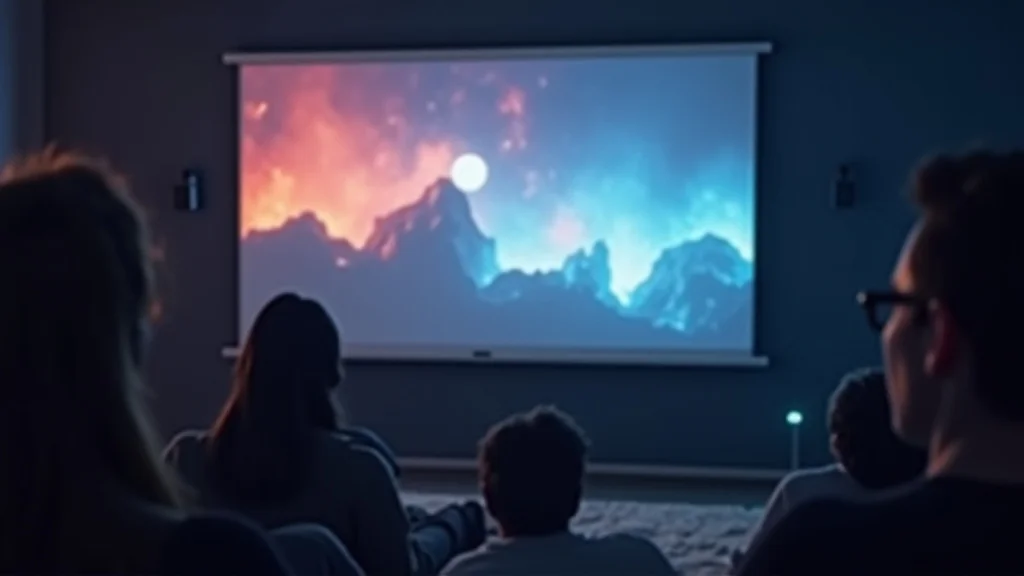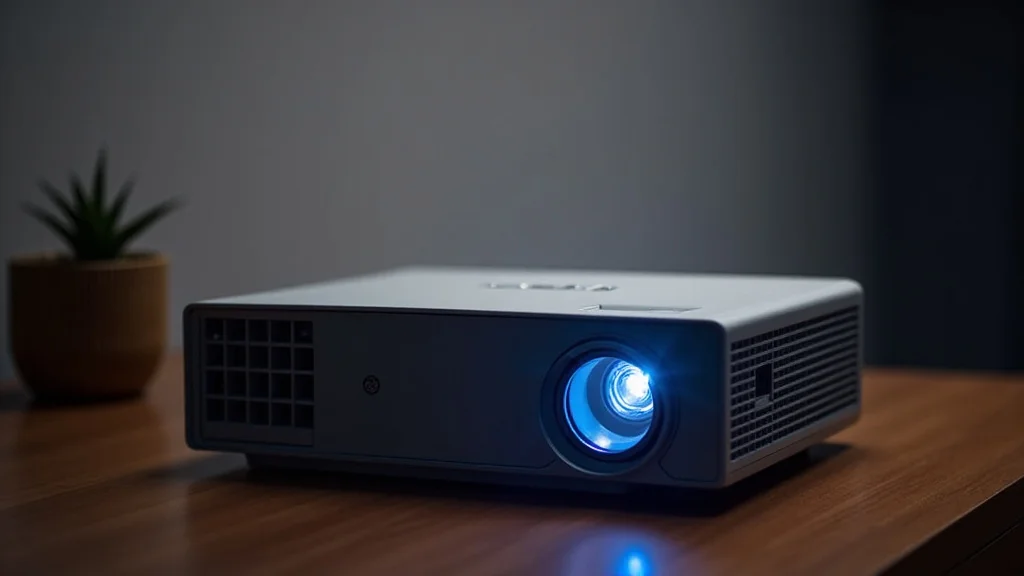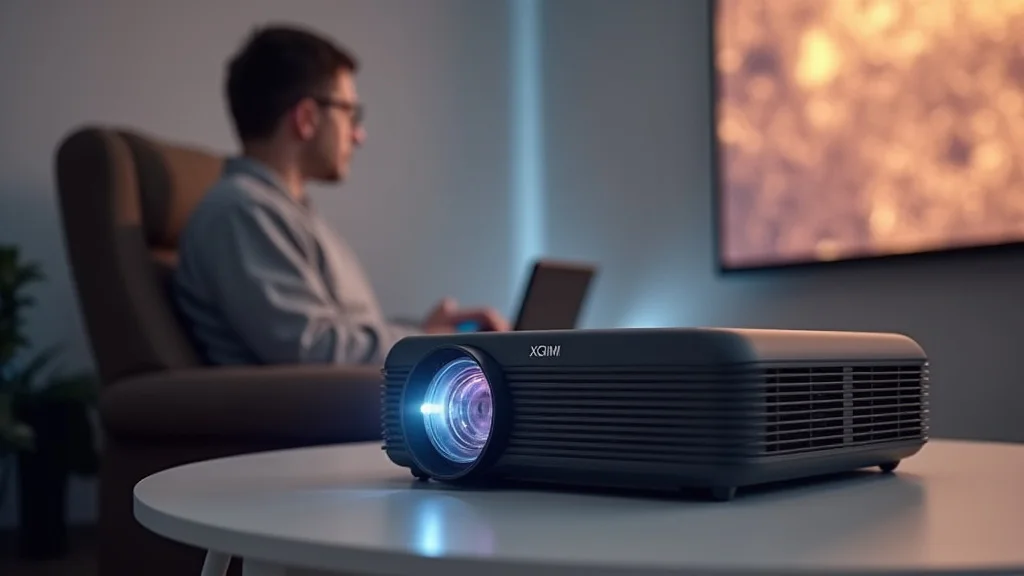
Picture this: you’re trying to share a presentation, but everyone’s crammed around your laptop screen, squinting to see the details. Frustrating, right? Or perhaps you’re setting up a movie night under the stars, but your laptop’s display just isn’t cutting it. That’s where a portable projector for laptop computer steps in, turning any surface into a screen! This guide will provide you with all the necessary information to choose the perfect portable projector. Prepare to discover how to find the ideal match that suits your needs. You’ll also learn the key features to focus on when exploring the various choices. This will help you select the ideal projector, whether for work, education, or entertainment.
Key Takeaways
- Learn how to choose the best portable projector for your laptop.
- Discover important specifications like resolution, brightness, and portability.
- Understand the different types of projectors available and their respective strengths.
- Find out how to connect a portable projector to your laptop computer.
- Get tips on maintaining and optimizing your projector for the best viewing experience.
- Explore useful features, such as built-in speakers and connectivity options.
Choosing the Best Portable Projector for Laptop Computer Use
Selecting the right portable projector for laptop computer involves careful consideration of several factors. Your specific needs, budget, and desired usage scenarios will guide your choices. Knowing your requirements is essential for a satisfying experience. You need to consider resolution, brightness, contrast ratio, and portability. You will also have to explore connectivity options and available features. The variety of options available can seem overwhelming. This section offers guidance to simplify the decision process.
Resolution and Image Quality
The resolution of a projector directly affects image clarity and detail. Higher resolutions, like Full HD (1920×1080) or even 4K (3840×2160), deliver sharper, more defined images. This is especially important if you plan to project text, spreadsheets, or detailed graphics. While higher resolutions are preferable, they often come at a higher price. Consider the native resolution – the actual number of pixels the projector can display. Avoid projectors that simply upscale lower-resolution content because they will not provide a truly high-quality picture. The ideal resolution varies depending on your needs. For general presentations and movie viewing, 720p or 1080p are great options. If you want the sharpest images possible, go for a 4K projector, but ensure your laptop can support the resolution as well.
- Native Resolution: This is the most crucial aspect of image quality. It’s the physical number of pixels the projector has.
- Supported Resolution: This refers to the highest resolution the projector can accept. It may be able to accept a 4K signal and downscale it.
- Brightness: Measured in lumens, brightness is critical for image visibility in different lighting conditions.
- Contrast Ratio: This measures the difference between the brightest white and darkest black a projector can display.
Brightness and Contrast Ratio
Brightness, measured in lumens, is a key consideration. It dictates how well the image will be visible in different lighting conditions. For dark rooms, a lower brightness is sufficient. If you plan to use the projector in a room with some ambient light, look for higher lumen output. The contrast ratio is another essential specification. It defines the difference between the brightest white and the darkest black. A higher contrast ratio results in a more vibrant and detailed image. This is particularly noticeable in movies and presentations with dark scenes. The room conditions play a significant role. The image quality can be compromised by ambient light. Consider the type of content you will be projecting and choose accordingly. A bright room will demand a higher lumen projector to maintain the picture quality.
- Brightness Levels: Projectors range from a few hundred lumens to several thousand.
- Ambient Light: Consider the amount of light in the room.
- Contrast Ratio Importance: Determines the quality of the image.
- Projector Type: Some projector types excel at contrast.
Portability and Size
The term “portable” in a portable projector for laptop computer can be broad. Consider how often you will be moving the projector and the space you have available. There are ultra-portable projectors designed to fit in your pocket, making them ideal for travel. Then there are slightly larger, more robust models that offer more features and better performance. Compact projectors are typically lighter and easier to carry. They are usually more compact than standard projectors. The trade-off is often in features or brightness. Before buying, think about how often you plan to move the device. Do you need a lightweight, ultra-portable model or one with a slightly larger size that is more suitable for home use? Consider the weight and dimensions of the projector. Check for a built-in battery for truly wireless operation.
- Weight: An important factor if you plan to carry the projector.
- Dimensions: Determine how easily the projector fits in a bag or backpack.
- Built-in Battery: Provides freedom from power cords.
- Travel Considerations: Packability and protection are essential if traveling.
Connectivity and Features of Portable Projectors
Connectivity options and additional features make a portable projector for laptop computer more versatile. The ability to connect easily to your laptop, smartphones, and other devices expands your options. Connectivity impacts your user experience. These features help to improve usability. Consider the ports available, such as HDMI, USB, and audio output. Furthermore, built-in features like speakers, keystone correction, and screen mirroring can make your projector experience smoother. Make sure the projector has the connection ports and functions that are right for your needs. It will depend on what devices you plan to connect.
HDMI and Other Connection Ports
HDMI is the most important port for connecting to laptops. Most laptops have an HDMI output. Make sure the projector you choose has an HDMI input. This allows for simple, high-quality video and audio transmission. Look for multiple HDMI ports if you plan to connect several devices simultaneously. USB ports are also useful for connecting flash drives or external hard drives. This allows for direct playback of media files. Some projectors may have VGA ports for older laptops. However, HDMI is generally preferred for its superior image quality. Ensure your projector supports the input from your devices. Also, make sure it offers all the features you need. Having multiple input options can improve flexibility and improve convenience.
- HDMI: Essential for connecting to laptops and other devices.
- USB: Enables connecting external storage devices.
- VGA: Suitable for older computers, but generally avoid.
- Audio Output: Enables connection to external speakers.
Wireless Connectivity and Bluetooth
Wireless connectivity, particularly Wi-Fi and Bluetooth, enhances portability and ease of use. Wi-Fi lets you mirror your laptop’s screen wirelessly. You can use this for direct streaming from online platforms. Bluetooth enables pairing with wireless speakers. This lets you improve the audio experience without extra cables. Some projectors have built-in apps for streaming services. You can also connect them directly to the internet. Wireless options let you create a cleaner, more streamlined setup. This makes it easier to set up a presentation or movie night. The advantage of wireless connectivity is its ease of use and flexibility. Think about how often you will use this feature before making a decision. Wireless connectivity increases convenience by allowing a cable-free setup.
- Wi-Fi: Enables wireless screen mirroring and streaming.
- Bluetooth: Allows connection to wireless speakers.
- Ease of Use: Simplifies setup and reduces clutter.
- App Integration: Streaming services can often be accessed directly.
Additional Features
Extra features like built-in speakers, keystone correction, and screen mirroring improve user experience. Built-in speakers provide audio output, though the quality is usually modest. You may want to connect to external speakers for better sound. Keystone correction helps to correct the image if the projector is not perfectly aligned with the screen. This allows you to square up the image regardless of the projector’s position. Screen mirroring lets you wirelessly display the content from your laptop or smartphone. This makes it easier to share content. Consider the features that are most valuable to you. Evaluate if they are worth the investment. For optimal audio quality, consider pairing the projector with an external sound system.
- Built-in Speakers: Offer basic audio output.
- Keystone Correction: Adjusts the image shape for easy alignment.
- Screen Mirroring: Enables wireless display from devices.
- Remote Control: Simplifies navigation and adjustments.
Setting Up Your Portable Projector for Laptop Computer
Setting up your portable projector for laptop computer is usually straightforward. The process involves physical placement and device connections. You must position the projector, connect to your laptop, and adjust the image. The setup process can be easily completed by following a series of clear steps. Proper setup ensures you get the best image quality. By paying attention to details, you can quickly begin enjoying your projected content. Follow the following steps for setting up your device.
Placement and Positioning
Placement is crucial for obtaining the desired image size and clarity. Place the projector on a stable surface, such as a table or tripod, facing the screen. The distance between the projector and the screen determines the image size. Refer to the projector’s specifications for the throw ratio. This will tell you how far away the projector must be for a specific image size. Make sure the screen is flat and free of obstructions. Use the projector’s adjustable feet or a tripod to level it. This will ensure a square image. Carefully consider the projection distance and desired image size. Position the projector to maximize image quality. Ensure the projector is placed on a stable surface. Also, ensure there is enough space in front of the screen. You will also have to keep in mind the ideal viewing angle.
- Throw Ratio: Important for determining projector placement.
- Surface: Project on a flat, obstruction-free surface.
- Adjustments: Use feet or a tripod to level the projector.
- Image Size: Distance impacts image size and clarity.
Connecting to Your Laptop
Connecting your portable projector for laptop computer to your laptop is simple. The most common method is using an HDMI cable. Connect one end of the cable to the HDMI output port on your laptop and the other to the HDMI input on the projector. Once connected, your laptop should automatically detect the projector. You may need to select the projector as the display output in your laptop’s settings. Sometimes, this can be done by pressing the Windows key + P. This lets you choose between “Duplicate,” “Extend,” or “Projector Only” modes. “Duplicate” will show the same image on both your laptop screen and the projector. “Extend” allows you to treat the projector as a second display. If your laptop lacks an HDMI port, use an adapter. You can also use a USB-C to HDMI adapter or a VGA cable. Ensure that both the laptop and projector are powered on. Select the correct input source on the projector to start projecting.
- HDMI Cable: The primary method for connecting to a laptop.
- Automatic Detection: Most laptops recognize the projector automatically.
- Display Settings: Configure the display mode to your preference.
- Adapters: Use adapters if your laptop lacks an HDMI port.
Image Adjustment and Keystone Correction
Once connected, you may need to adjust the image to ensure it’s displayed correctly. Use the projector’s settings to adjust the focus and zoom. Focus to sharpen the image. Zoom to change the image size. Keystone correction is an essential feature if the projector is not perfectly aligned with the screen. Keystone correction lets you square up the image by correcting for angled projection. Some projectors have both horizontal and vertical keystone correction. These features provide greater flexibility in placement. Make fine adjustments to the image for optimal viewing. Play around with the keystone correction and zoom to maximize clarity and alignment. Check the picture and make sure it is aligned to your screen.
- Focus and Zoom: Essential for clarity and image size adjustment.
- Keystone Correction: Corrects the image shape for proper alignment.
- Image Settings: Fine-tune settings to optimize the viewing experience.
- Trial and Error: Test various settings to get the best result.
Maintenance and Optimization
To ensure your portable projector for laptop computer provides a long life and consistent performance, follow regular maintenance tips. These include cleaning the lens, managing the lamp life, and ensuring proper ventilation. Properly maintaining your projector will improve its performance. It will also help preserve its lifespan. Proper care will let you get the most from your investment. You can optimize the viewing experience and prevent common problems.
Cleaning and Lens Care
Keeping the lens clean is essential for maintaining image quality. Dust and fingerprints can reduce brightness and clarity. Use a soft, lint-free cloth or a microfiber cloth. Gently wipe the lens to remove any dirt or smudges. Avoid using harsh chemicals or abrasive materials. This can damage the lens coating. If the lens is heavily soiled, you can use a lens-cleaning solution. Always follow the manufacturer’s instructions. Keep the projector in a dust-free environment. You should also store it in a protective case when not in use. Regular cleaning will help prevent image distortion and keep the images looking crisp. You should routinely inspect the lens to ensure that it is clean.
- Soft Cloth: Use a soft cloth to gently clean the lens.
- Cleaning Solutions: Use lens-cleaning solutions if needed.
- Dust-Free Environment: Keep the projector in a dust-free area.
- Protective Case: Store it in a case when it’s not in use.
Lamp Life and Replacement
The lamp is a critical component of a projector. It determines the brightness and lifespan of the device. The lamp life varies depending on the projector model and usage. Most projectors provide an estimated lamp life. This is often stated in hours. Monitor the lamp hours used and
- Lamp Life: Typically measured in hours of use.
- Warning Signs: Look for dimming images or error messages.
- Replacement: Follow the instructions for changing the lamp.
- Compatibility: Use only compatible lamps for your projector.
Ventilation and Overheating
Proper ventilation prevents overheating and extends the life of the projector. Projectors generate heat. Good ventilation is essential for cooling. Ensure that the projector’s vents are not blocked. Never place the projector in an enclosed space. This prevents heat buildup. Position the projector in an area with adequate airflow. If the projector overheats, it may shut down automatically. This is a safety mechanism. If this happens often, check the ventilation and the surrounding environment. Make sure to clean the vents regularly. This prevents dust buildup. If necessary, you can use a small fan to assist with cooling. By ensuring proper ventilation, you protect the projector’s components. You also improve its longevity.
- Airflow: Ensure the projector has adequate airflow.
- Blocked Vents: Make sure the vents are not blocked.
- Overheating: Prevent overheating to extend projector life.
- Environmental Factors: Consider the surrounding environment.
Common Myths Debunked
Myth 1: Portable Projectors Are Only for Movies
Many believe that portable projectors for laptop computer are only suitable for watching movies. However, they are highly versatile tools. They are excellent for presentations, displaying spreadsheets, and sharing photos. They are also useful for educational activities. They’re great for gaming and enjoying creative content.
Myth 2: All Projectors Need a Dark Room
While projectors perform best in dark rooms, many modern projectors have high brightness levels. These models allow for clear visibility in rooms with ambient light. Brightness, measured in lumens, is the key factor. High-lumen projectors can be used even in well-lit environments. Proper selection of the projector based on the environment is critical. This is a factor when choosing the right model.
Myth 3: High Resolution Always Means High Image Quality
While higher resolution projectors are often better, it’s not the only factor. Brightness, contrast ratio, and lens quality also significantly impact image quality. Resolution is important. However, it’s not the sole determinant of a clear and vibrant image. You must consider the balance among all these factors.
Myth 4: Portable Projectors Are Too Expensive
The price of portable projectors for laptop computer varies widely. The cost is affected by features, resolution, and brightness. There are models available to fit different budgets. Several options offer great value for money. You can get a good-quality portable projector without spending a fortune. There are choices available, from budget-friendly options to high-end models.
Myth 5: Portable Projectors Are Complicated to Set Up
Most portable projectors are easy to set up. Connecting to a laptop or other devices usually involves plugging in an HDMI cable. The basic setup process is straightforward. Adjusting settings, such as focus and keystone correction, is intuitive. The user-friendly design makes it simple to start enjoying projected content.
Frequently Asked Questions
Question: Can I use a portable projector with my smartphone?
Answer: Yes, many portable projectors can connect to smartphones. This connection is done through either HDMI, USB-C, or wireless mirroring.
Question: What’s the ideal brightness level (lumens) for a projector?
Answer: The ideal brightness depends on your usage environment. For dark rooms, 1000-2000 lumens is generally sufficient. For rooms with ambient light, choose a projector with 2500 lumens or more.
Question: How do I adjust the image shape if my projector isn’t centered?
Answer: Use keystone correction. Keystone correction lets you square the image if the projector is not perfectly aligned with the screen. Most projectors have keystone correction settings in their menus.
Question: How long do projector lamps last, and how do I know when to replace them?
Answer: Lamp life varies, usually from 1,000 to 5,000 hours. Your projector will usually provide a warning when the lamp nears the end of its life, which may include image dimming or a message on the screen.
Question: Is it possible to use a projector for outdoor movies?
Answer: Yes, projectors are ideal for outdoor movies. Choose a projector with sufficient brightness and a portable power source if there’s no outlet nearby.
Final Thoughts
Selecting the right portable projector for laptop computer offers a lot of versatility. Consider resolution, brightness, and size. Ensure that the device suits your particular needs and environment. Think about the connection ports and available functions, such as wireless connectivity. Proper setup, maintenance, and lens care will help optimize its performance. By choosing the right projector and taking good care of it, you can take your presentations, movie nights, and entertainment to the next level. Ready to transform your viewing experience? Explore the options, choose the perfect projector, and transform any space into a home theater.